
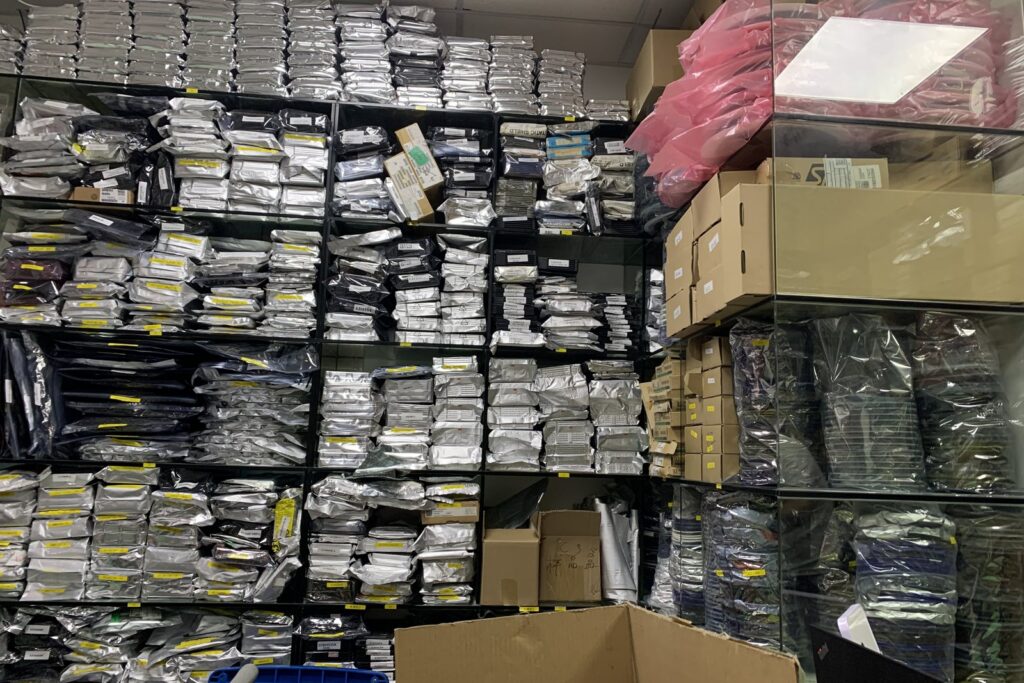
Every procurement team ends up holding parts it will never build with. A cancelled program, a revised BOM, a last-time buy that ran long — the stock is good, the demand simply moved. What follows is usually inertia: the lot sits on the shelf, the finance team carries it at full value, and the write-down arrives two years later.
The cost is not only the capital. Surplus takes up the rack space that fast-moving stock needs, and date codes keep ageing while the lot waits for a decision.
Three routes, depending on how fast you need the cash
Outright purchase. We buy the lot, you invoice once, and the parts leave your shelves. This is the shortest path from stock to cash, without a chain of intermediaries between you and the buyer.
Brokered sale. The goods stay in your warehouse while we market them to our customers. You are paid once they sell, so nothing is tied up upfront — a good fit for lots you are not yet certain you want to release.
Consignment. The lot moves into our Hong Kong warehouse and is listed under our name, settled as it sells. It reaches a wider audience than a private list, and you get your floor space back immediately.
What to send us
An Excel or CSV list is enough to start: manufacturer part number, manufacturer, quantity, date code and packaging condition. Our purchasing desk reviews it and comes back with a route and an indication of value. There is a budget set aside for this every year, so a serious list gets a serious answer.